Why 'bad news is good news' is back — and how to tell when it stops working
Weak retail sales and soft jobs data lifted stocks last week because they argue against a rate hike. That logic has a shelf life, and the expiry conditions are visible in advance.
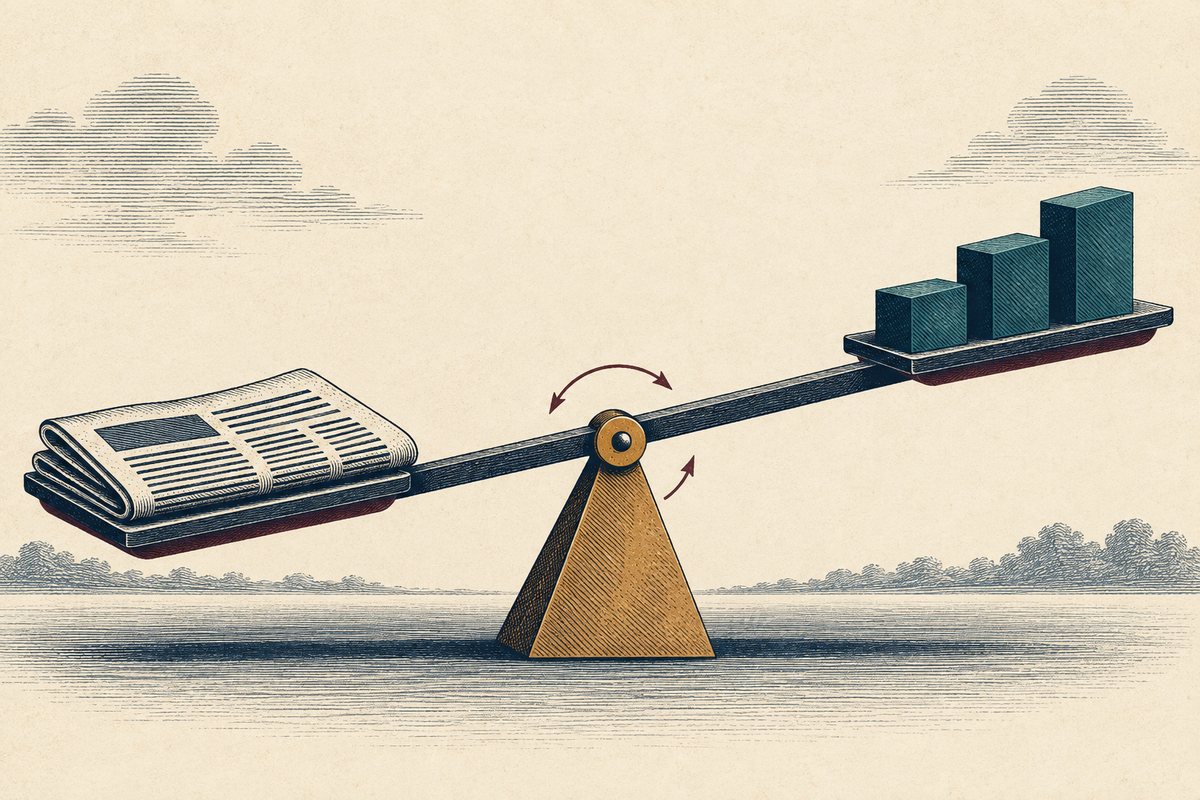
Last week produced a market pattern that reads as nonsense to anyone outside finance: shops sold less, hiring data disappointed, and equities rose. The mechanism is rate expectations. With part of the Federal Reserve arguing for a hike, every piece of soft economic data lowers the odds of tighter policy — so bad news for workers arrives as good news for asset prices. Northlight's Chris Zaccarelli described the week to American Banker as "three positive reports in a row," two of which were positive only in that inverted sense.
The regime has a well-defined failure mode, and it is worth stating before it happens rather than after. Bad news supports equities only while it stays small enough not to threaten earnings. The moment soft demand data starts cutting revenue forecasts, the same reports flip sign: they stop promising a gentler Fed and start promising weaker profits. With consumer spending traceable to nearly 70% of GDP, the distance between "cooling enough to hold rates" and "cooling into the earnings line" is not large.
Three indicators mark the boundary. Watch real yields rather than the policy rate — the ten-year Treasury near 4.69% against easing inflation means the bond market is doing some tightening on its own, and Reuters notes it is real yields that pressure the AI-heavy long-duration end of the equity market. Watch guidance rather than results: this season's rare negative outlooks are the tell to count. And watch the shops directly — which is why a Walmart print, this week, carries more regime information than any Fed speech.
The Ledger's read: enjoy the inversion while it lasts, but treat it as a phase, not a law. The trades that work in "bad news is good news" — long duration, long the index — are precisely the ones that break when the regime flips, and regimes flip mid-quarter, not at scheduled meetings.
From The Ledger archive. A factual review record is not available for this article. About our editorial standards. Material sources are credited and linked above; quotations are brief and attributed.