The capex ledger: what a $700bn AI build-out does to the market's balance sheet
The deep dive for the week of 17 August. Big Tech's AI spending is on course to nearly double in a year, to more than $700 billion. That is no longer a software story — it is an infrastructure cycle, and it moves the risk somewhere the equity market isn't used to looking.
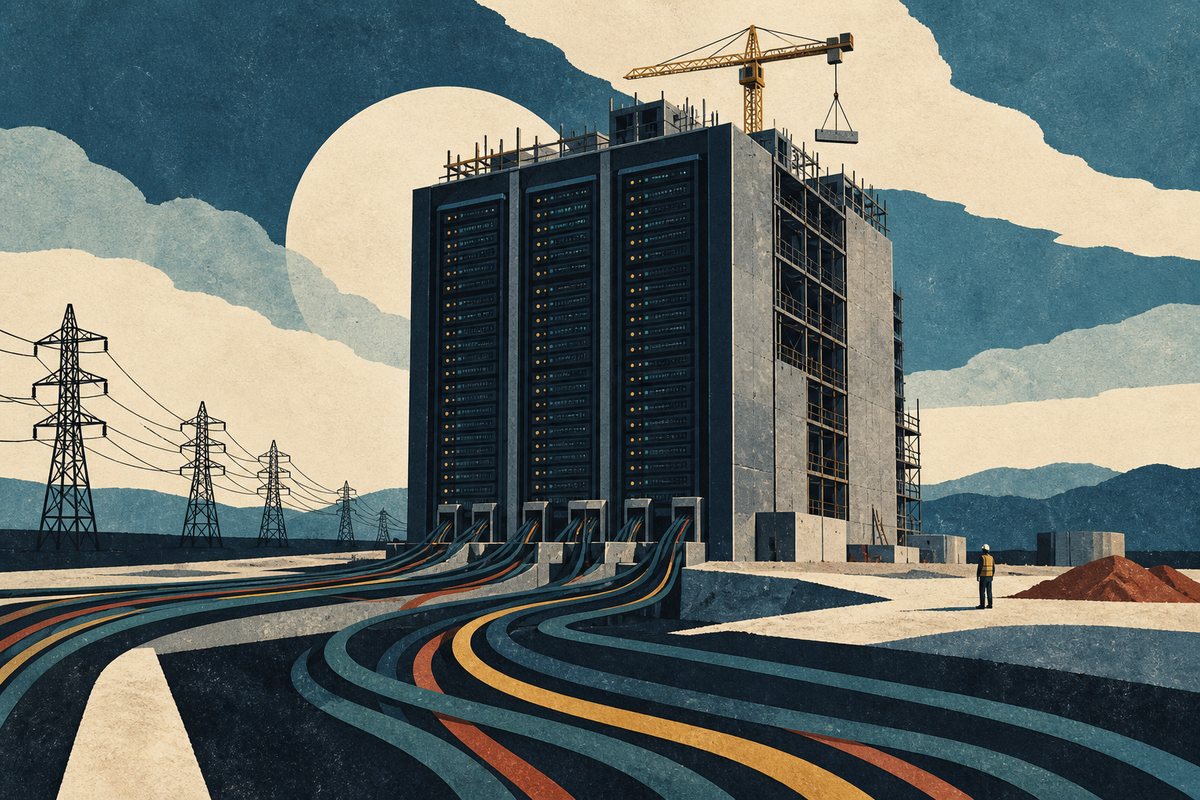
For its first act, the AI boom ran on the prettiest business model in history: software margins on top of someone else's infrastructure. The second act looks very different. Estimates cited by Reuters put the large platform companies' AI spending above $700 billion this year, up from roughly $400 billion in 2025 — commitment to chips, data centres and power on a scale that belongs in the same sentence as railways and telecoms. When spending of that size shows up anywhere, the correct instinct is not excitement or dread. It is accounting.
From income statement to balance sheet
A software business sells the same code twice at almost no extra cost, which is why the market pays so richly for it. A data centre is the opposite: enormous cost up front, revenue later, maybe. As the hyperscalers pour cash into physical capacity, a growing share of their value rests not on the economics they have, but on the economics they expect. Depreciation is where that bet becomes visible. Concrete and turbines depreciate over decades; the accelerators inside are superseded in a few years. Small changes in assumed useful life move reported earnings by billions, in businesses the market still prices as if capital hardly mattered.
Every technology bubble in history has been a dispute about depreciation schedules that called itself a dispute about the future.
That is only mildly unfair. The fibre glut of 2000 was a bet that traffic would arrive before the equipment aged; traffic arrived, but a decade late and at prices that ruined the people who laid the glass. The lesson was never that the optimists were wrong about demand. It was that being right about demand and wrong about timing is, financially, the same thing as being wrong.
Why this cycle is different — in both directions
The bull case has evidence the fibre era lacked. This earnings season, profit growth broadened to ten of eleven S&P sectors, per Bessemer Trust's tally, and the index climbed 22% over a year while its forward multiple fell from 22.4 to 20.2 — growth paid for by earnings, not valuation. Reuters reports investors now read the capex as a response to demonstrated demand, with strong forecasts from Microsoft and Amazon underwriting the mood. The spenders are the most profitable companies that have ever existed, funding much of this from operating cash flow.
The bear case is about what "much" conceals. At $700 billion a year the marginal dollar increasingly arrives through financing — bonds, leases, joint ventures and special-purpose vehicles that place assets a step away from the sponsor's balance sheet. Risk that equity holders chose knowingly is migrating toward credit markets that price it like infrastructure. Sometimes it is. The difference between a toll road and a warehouse of accelerators is that nobody re-invents the toll road every thirty months. Meanwhile index concentration means the trade lives in pension portfolios that never chose it — and with the ten-year Treasury near 4.69%, the AI complex is being marked against real yields that no longer flatter long-duration bets.
What would tell you the story is turning
Watch utilisation and pricing rather than announcements: committed capacity is a press release, while the rental price of compute is a market clearing in real time — if it falls while build-out accelerates, supply is winning. Watch the gap between capex guidance and free cash flow, and note the first big spender to describe its depreciation assumptions as conservative. Watch power, the one input no financing structure can conjure. And watch credit terms on data-centre deals: when lenders start writing covenants like it's speculative construction, they will have concluded something the equity market hasn't said aloud.
None of this says the technology disappoints. The railways were transformative and ruinous at the same time, for different people, in that order. The question for anyone reading AI headlines through a financial lens is never only whether the future arrives. It is who is paying for the track, at what cost of capital, and what they have promised themselves about how long it lasts.
From The Ledger archive. A factual review record is not available for this article. About our editorial standards. Material sources are credited and linked above; quotations are brief and attributed.